Centimeters and Millimeters, Explained
How to Read a Ruler in CM and MM
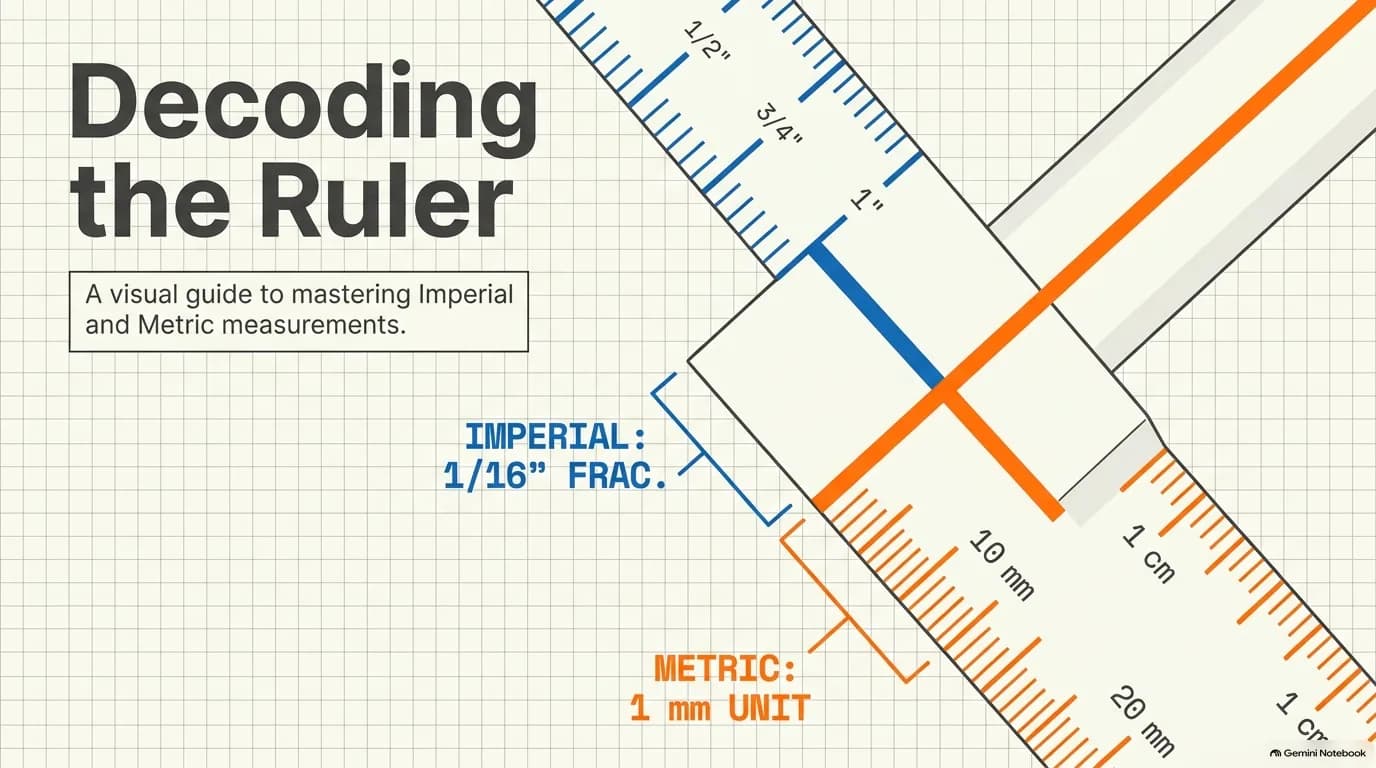
Reading a ruler in cm and reading one in mm are really the same skill - here's how both units line up on the exact same ruler.
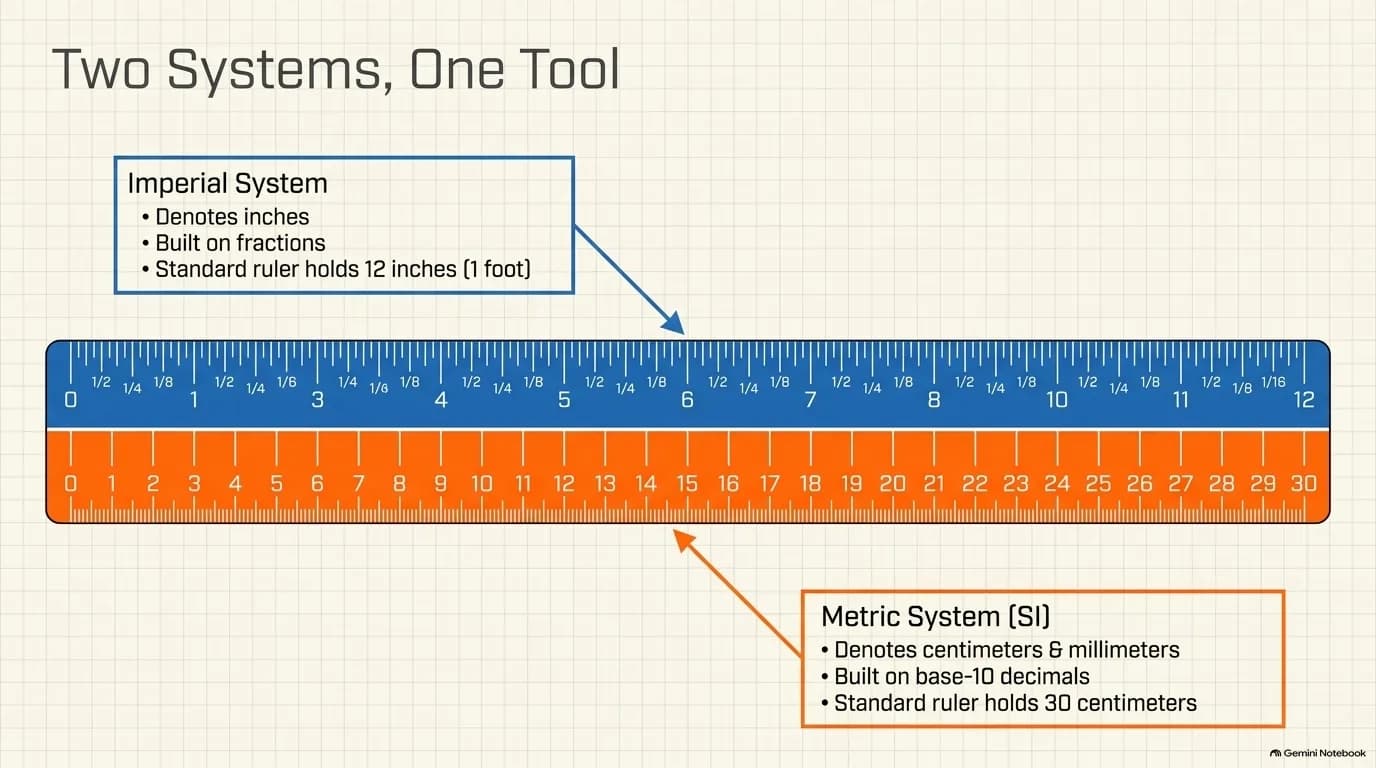
Whether you need to read a ruler in cm or in mm, the good news is you're looking at the exact same lines either way - millimeters are just the fine print between the centimeter marks. Once you can see that relationship, switching between the two units is nearly instant.
Key Takeaways
- The numbered long lines on a metric ruler mark centimeters
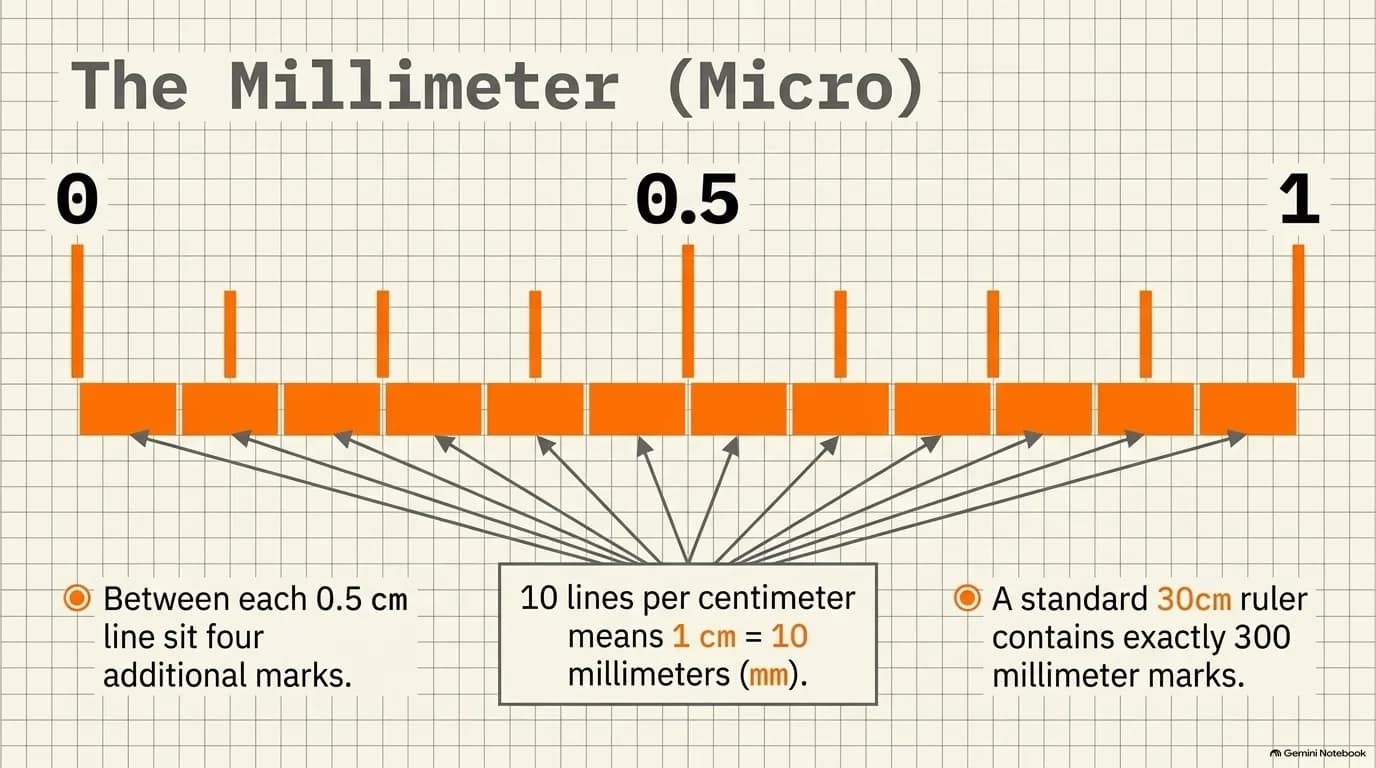
- The 9 small unlabeled lines between each cm mark are millimeters
- 1 cm = 10 mm, so converting between them is just multiplying or dividing by 10
- No fractions needed - metric rulers are entirely decimal-based
Understanding Metric Ruler Markings
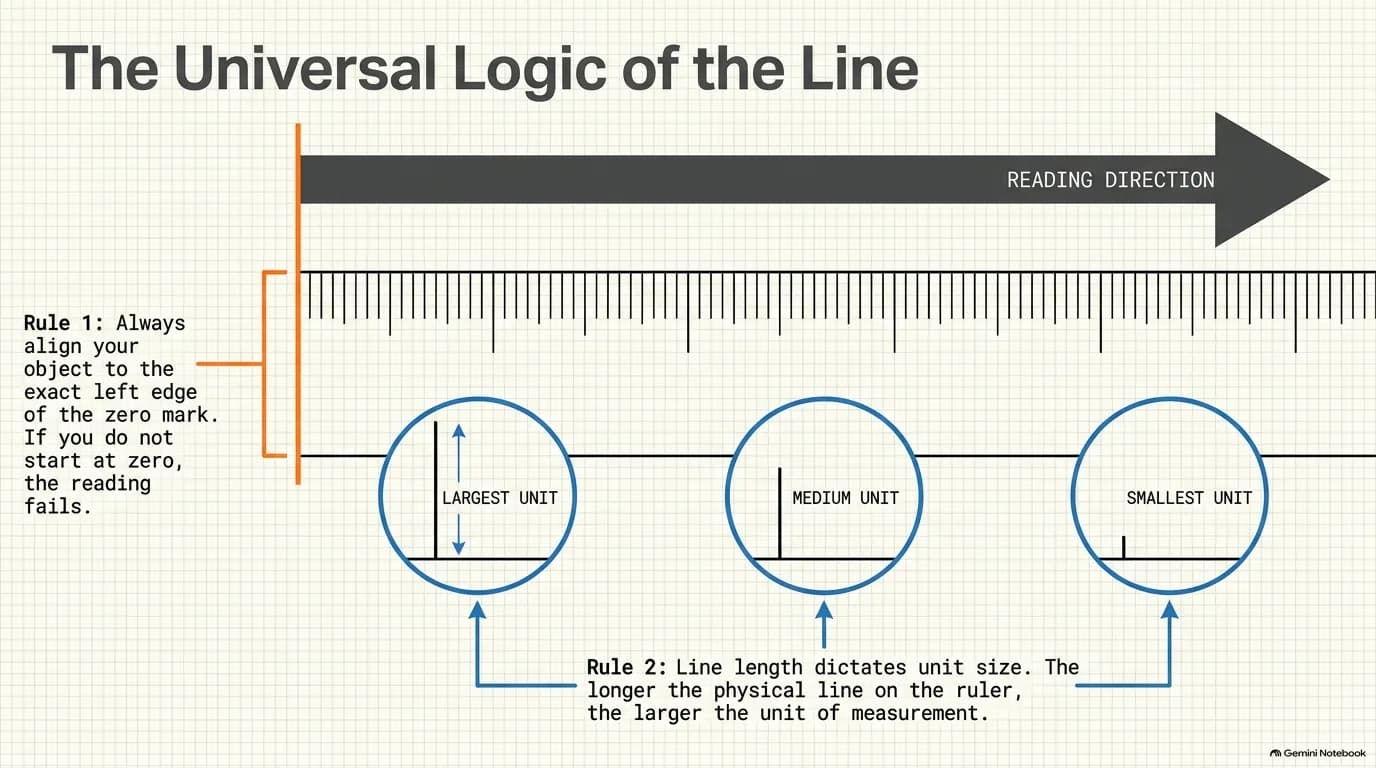
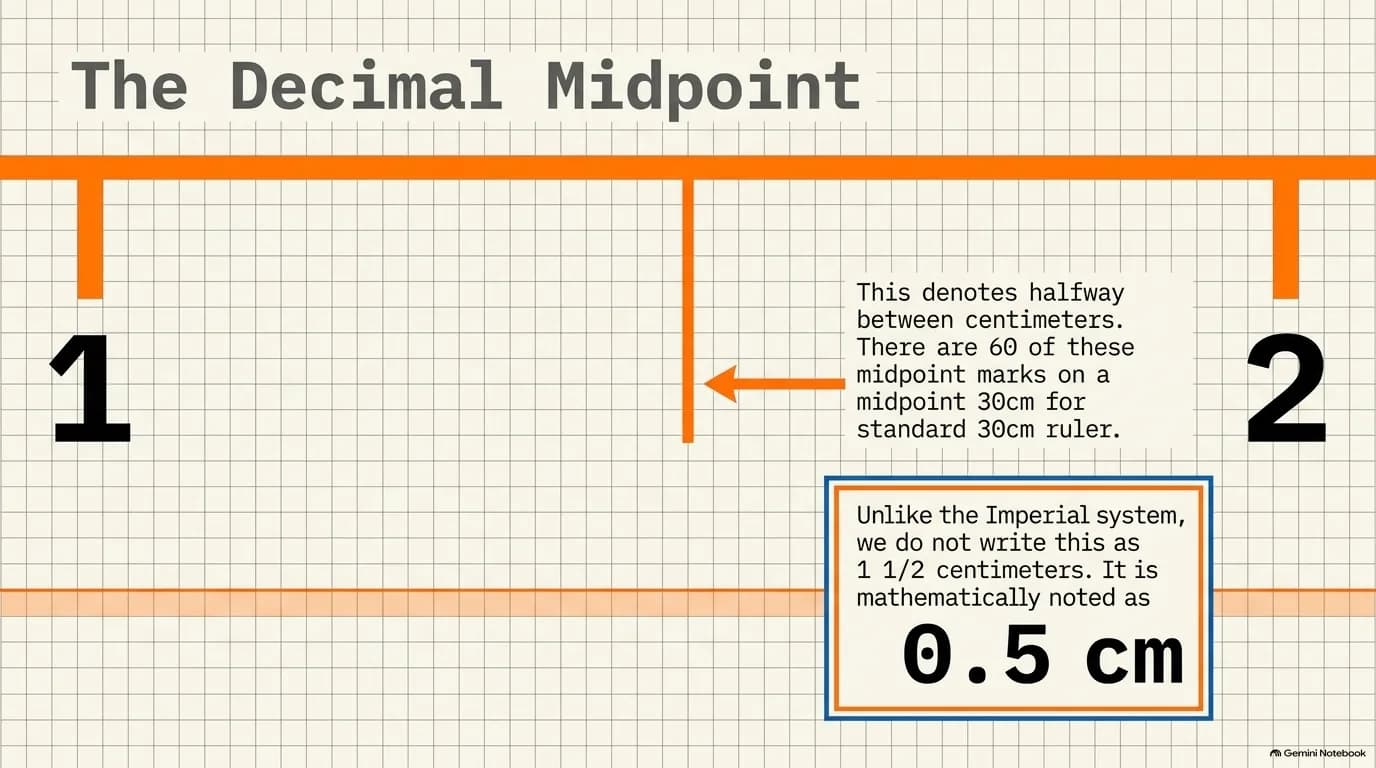
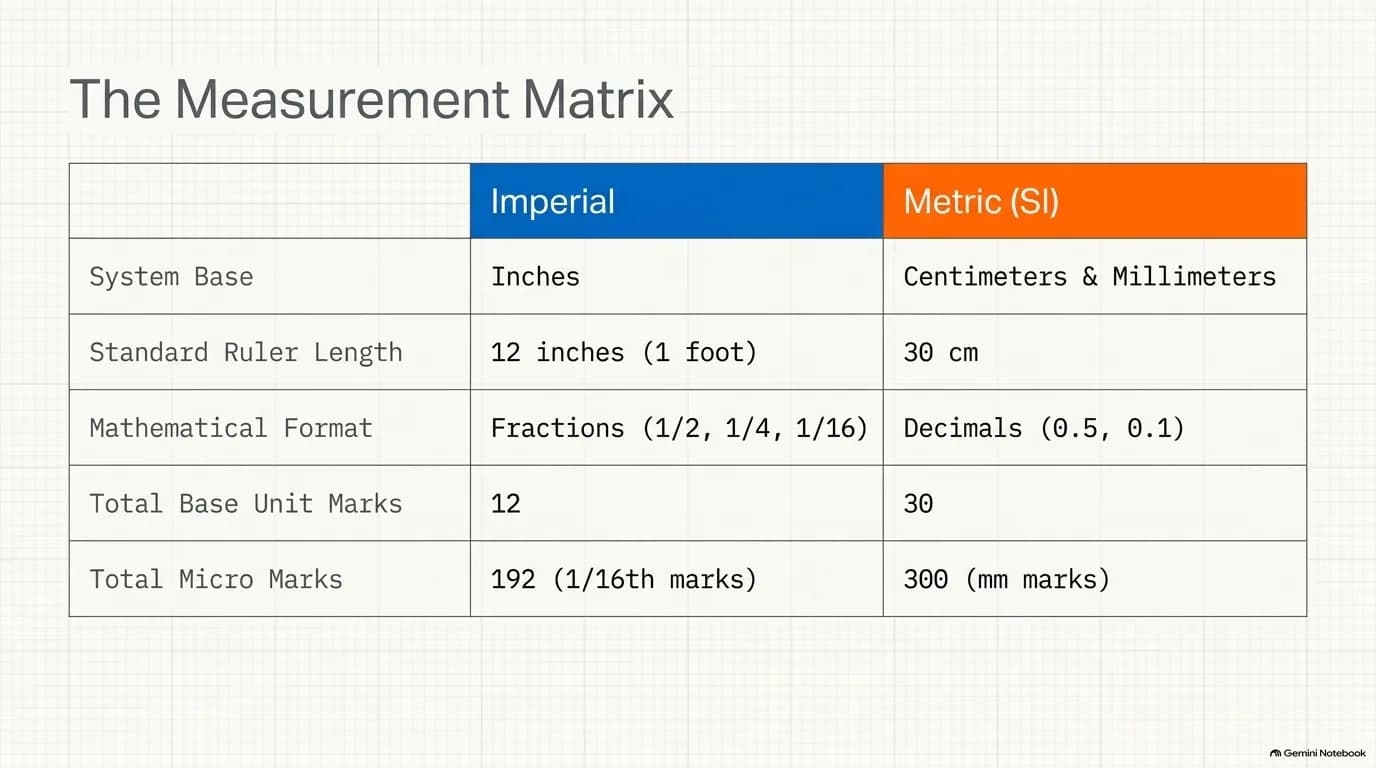
A metric ruler is simpler than an inch ruler in one specific way: everything is based on tens instead of fractions. The longest, numbered lines mark whole centimeters. Between each pair of centimeter marks, you'll count 9 shorter, unlabeled lines - each one is a single millimeter, making 10 equal millimeter divisions per centimeter.
How to Read a Ruler in CM
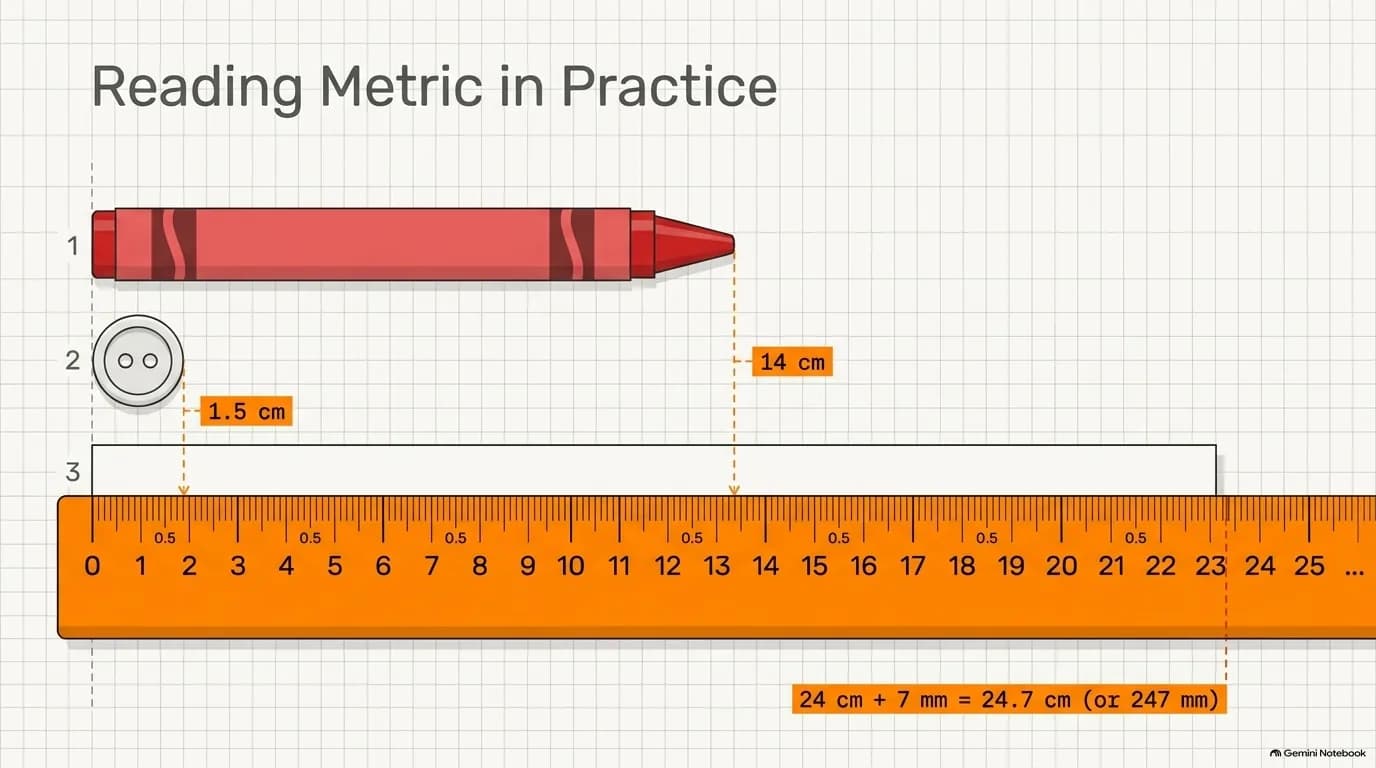
Find the last whole centimeter mark before your object ends, then count the small millimeter ticks past it and write that count as a decimal. For example, if an object ends 7 small ticks past the 4 cm mark, that's 4.7 cm - the 7 ticks become the tenths place.
Free tool: Online RulerTry the Online RulerFor a full visual walkthrough of both systems side by side, flip through this deck:
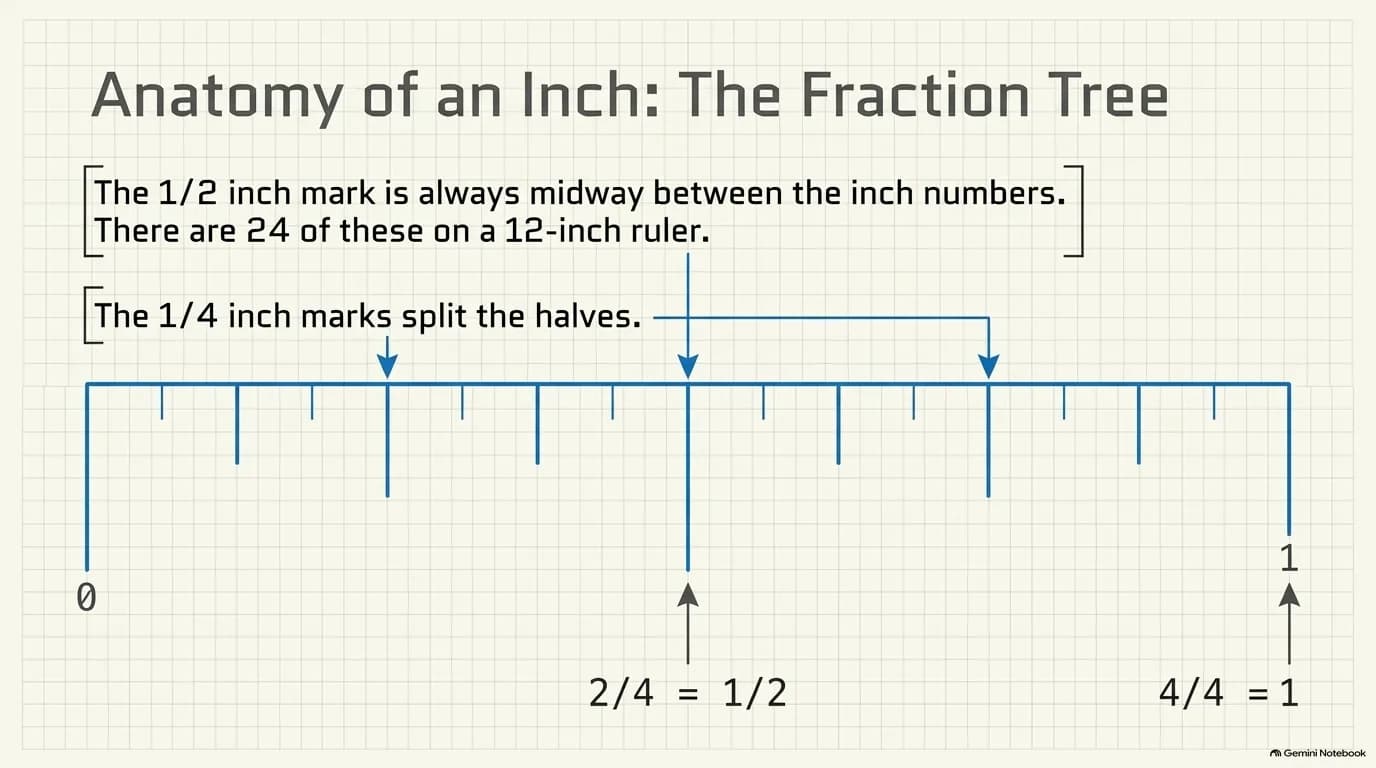
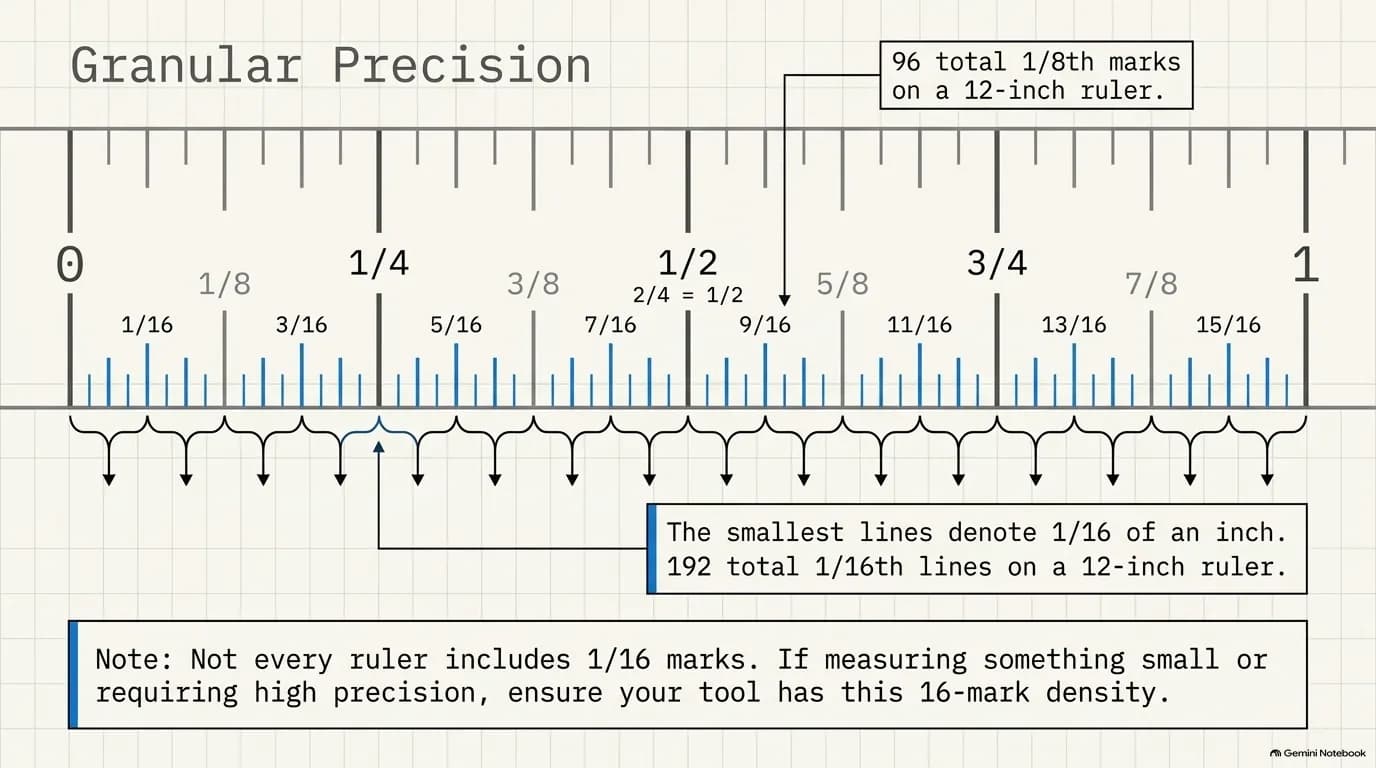
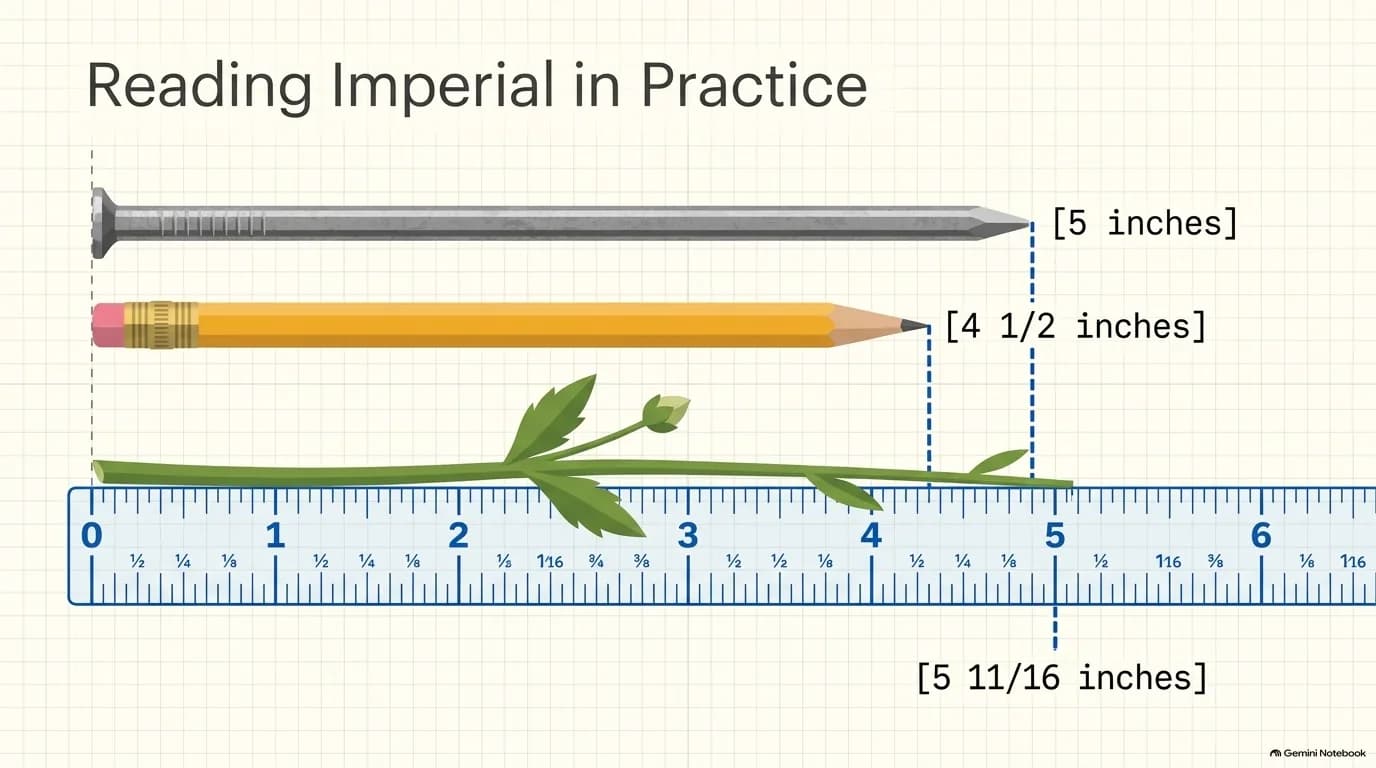
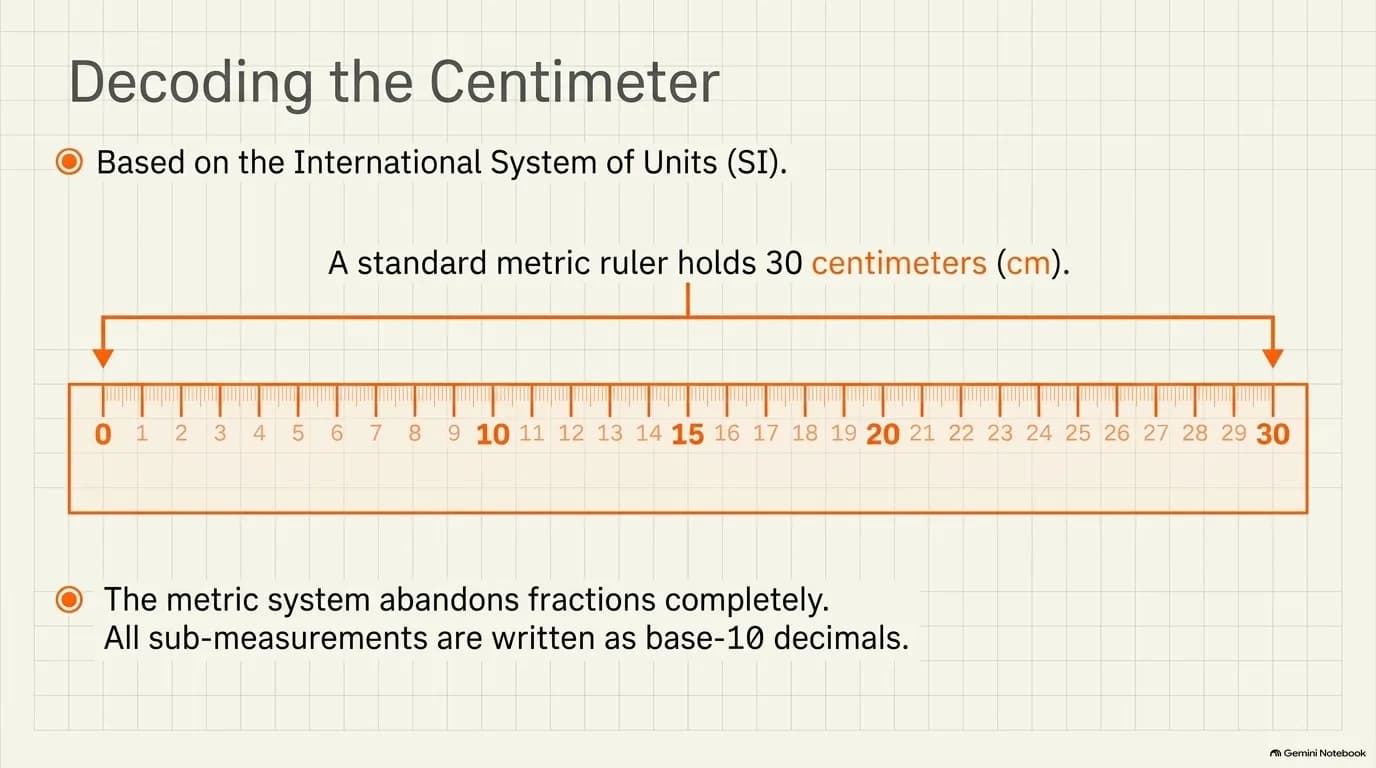
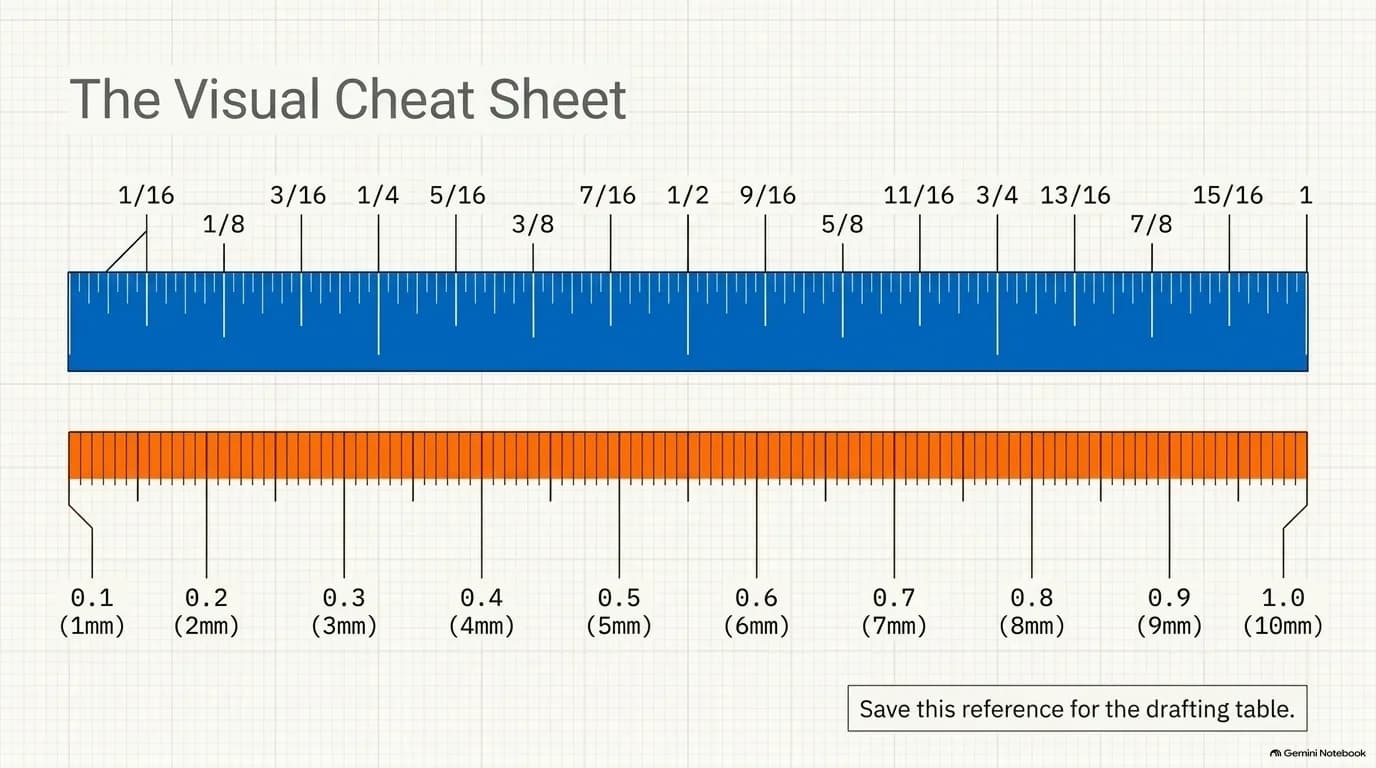
Slide 1 of 13 · hover to pause · click to enlarge
How to Read a Ruler in MM
The same object from the example above - 4.7 cm - is also 47 mm, since 4 cm = 40 mm and the extra 7 ticks are 7 more millimeters: 40 + 7 = 47. Reading directly in millimeters is common when you need finer precision than a single decimal place of a centimeter can show, like in woodworking, jewelry, or engineering drawings.
Our Online Ruler reads out in centimeters to one decimal place, which is the same precision as whole millimeters - a reading of 4.7 cm and a reading of 47 mm are identical, just written in different units.
Converting Between CM and MM
Since 1 cm always equals 10 mm, converting is a single multiplication or division: multiply centimeters by 10 to get millimeters, or divide millimeters by 10 to get centimeters. For quick mental math that's easy enough by hand, but for longer measurements or converting to other units entirely (inches, feet, meters), our Unit Converter handles it instantly.
Free tool: Unit ConverterConvert cm to mmFrequently Asked Questions
How many mm are in 1 cm?
There are 10 millimeters in 1 centimeter - it's the basis of the entire metric system.
How do you read a ruler in cm?
Find the last whole centimeter mark before your object ends, then count the small millimeter ticks past it as a decimal - for example, 7 ticks past the 4 cm mark is 4.7 cm.
How do you read a ruler in mm if it only shows cm numbers?
Count every small unlabeled tick as 1 mm. Multiply the labeled centimeter number by 10, then add the number of small ticks past it to get the total in millimeters.
What is 4.7 cm in mm?
4.7 cm is 47 mm, found by multiplying 4.7 by 10.
Does the Online Ruler measure in millimeters?
Yes - its Centimeters mode marks every millimeter and displays readings to one decimal place, which is the same precision as counting whole millimeters.