A Practical Guide to Reading and Measuring
How to Read a Ruler
How to read a ruler comes down to understanding what each line means and lining your object up correctly - here's both, plus how to measure accurately every time.
Learning how to read a ruler is really two skills at once: knowing what each line represents, and knowing how to line an object up so your reading is actually accurate. Miss either one and your measurement can be off, even if you picked the right tick mark.
Key Takeaways
- Longer lines mark whole units; shorter lines mark fractions of a unit
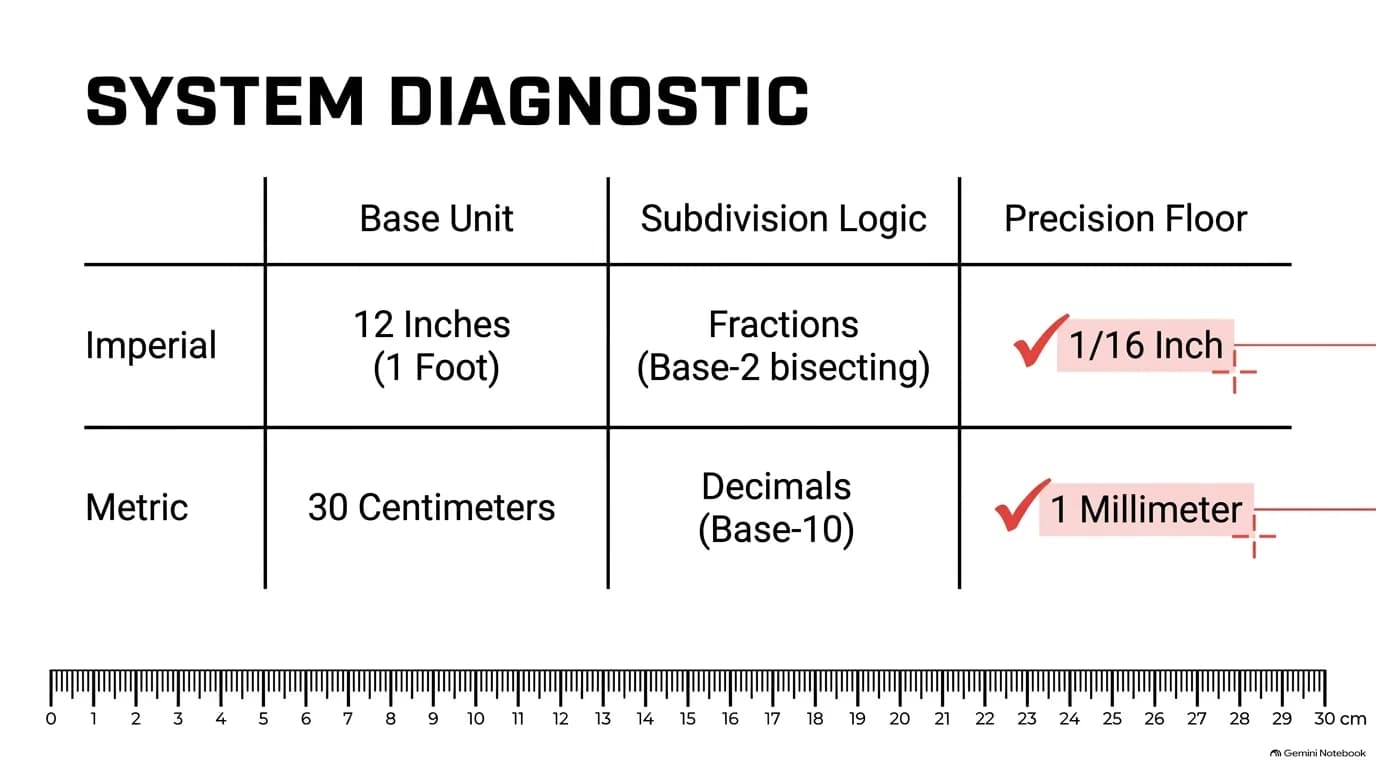
- Inch rulers typically divide down to sixteenths (1/16″)
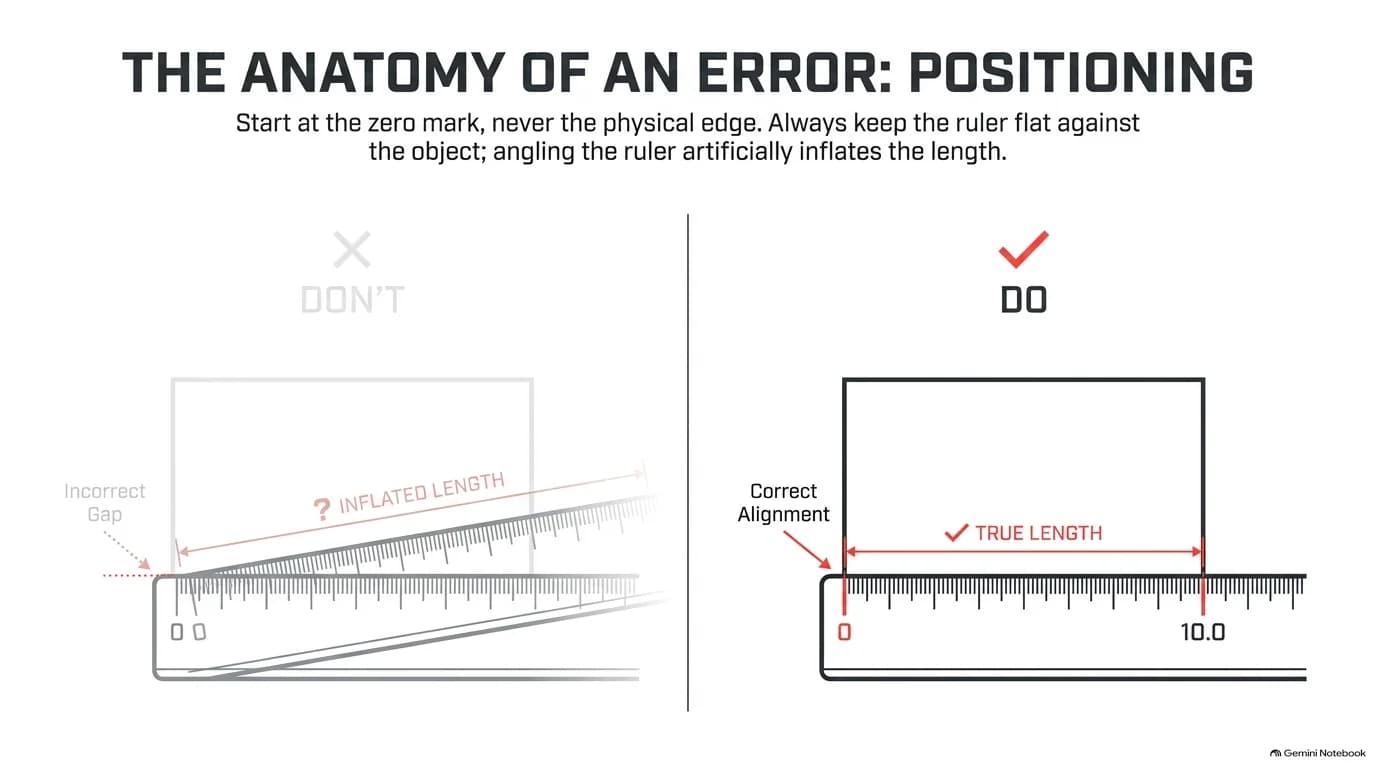
- Always line up the edge of your object with the “0” mark, not the edge of the ruler
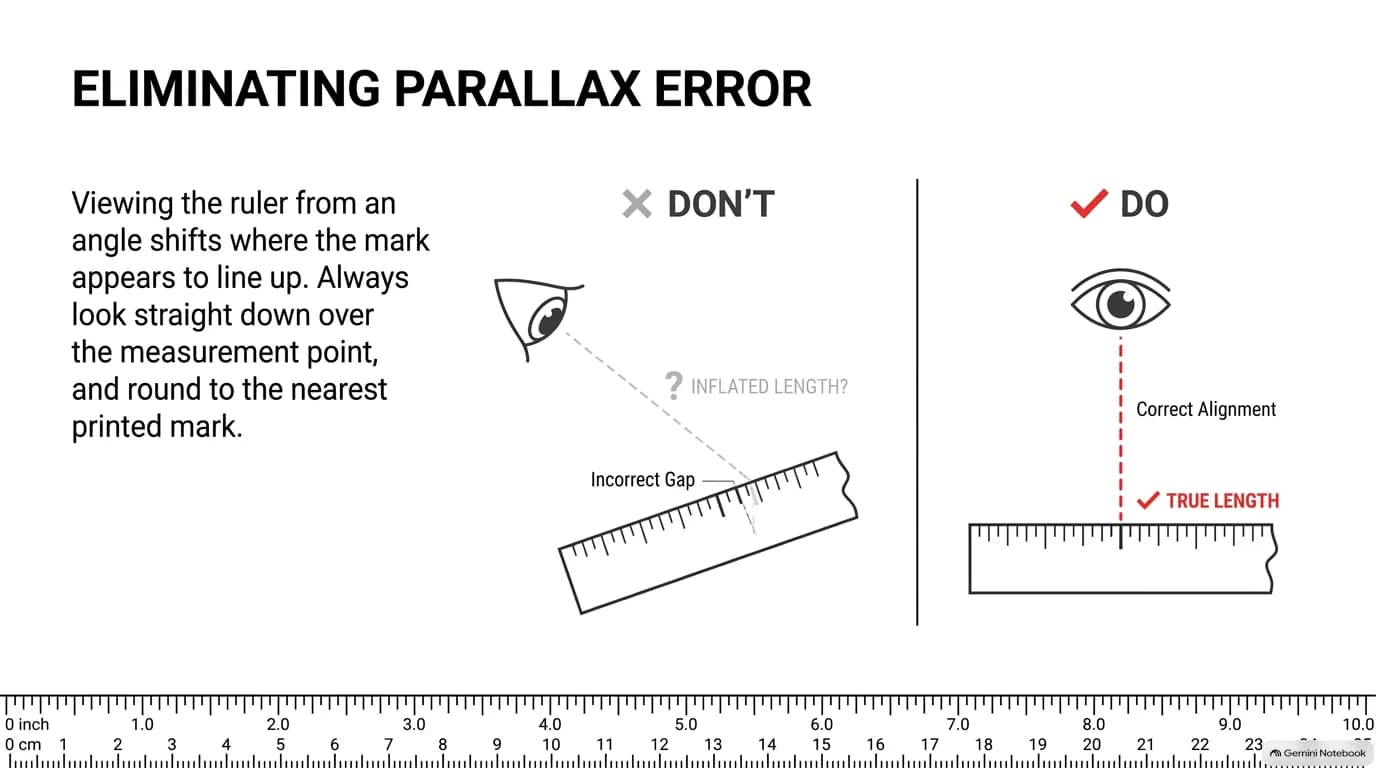
- Viewing the ruler at an angle can throw off your reading (parallax error)
Understanding the Markings on a Ruler
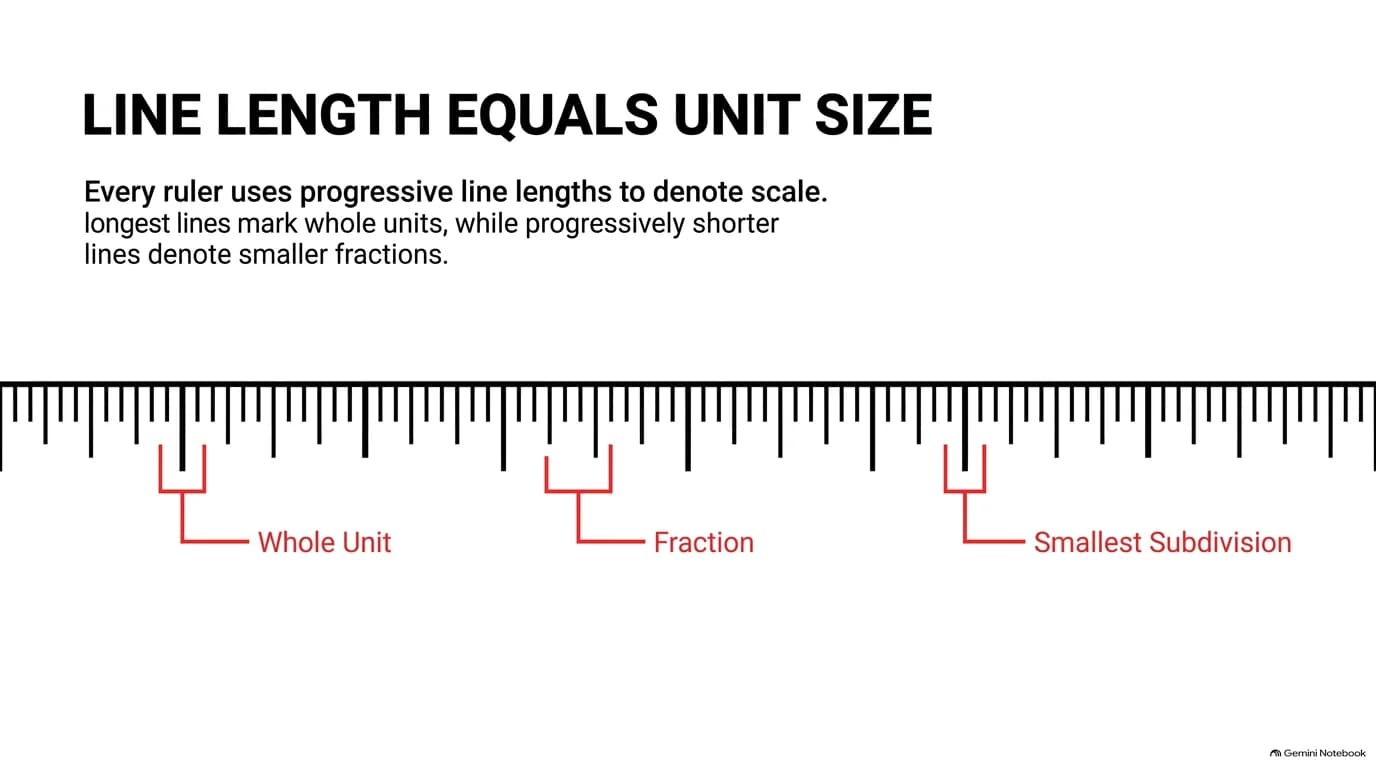
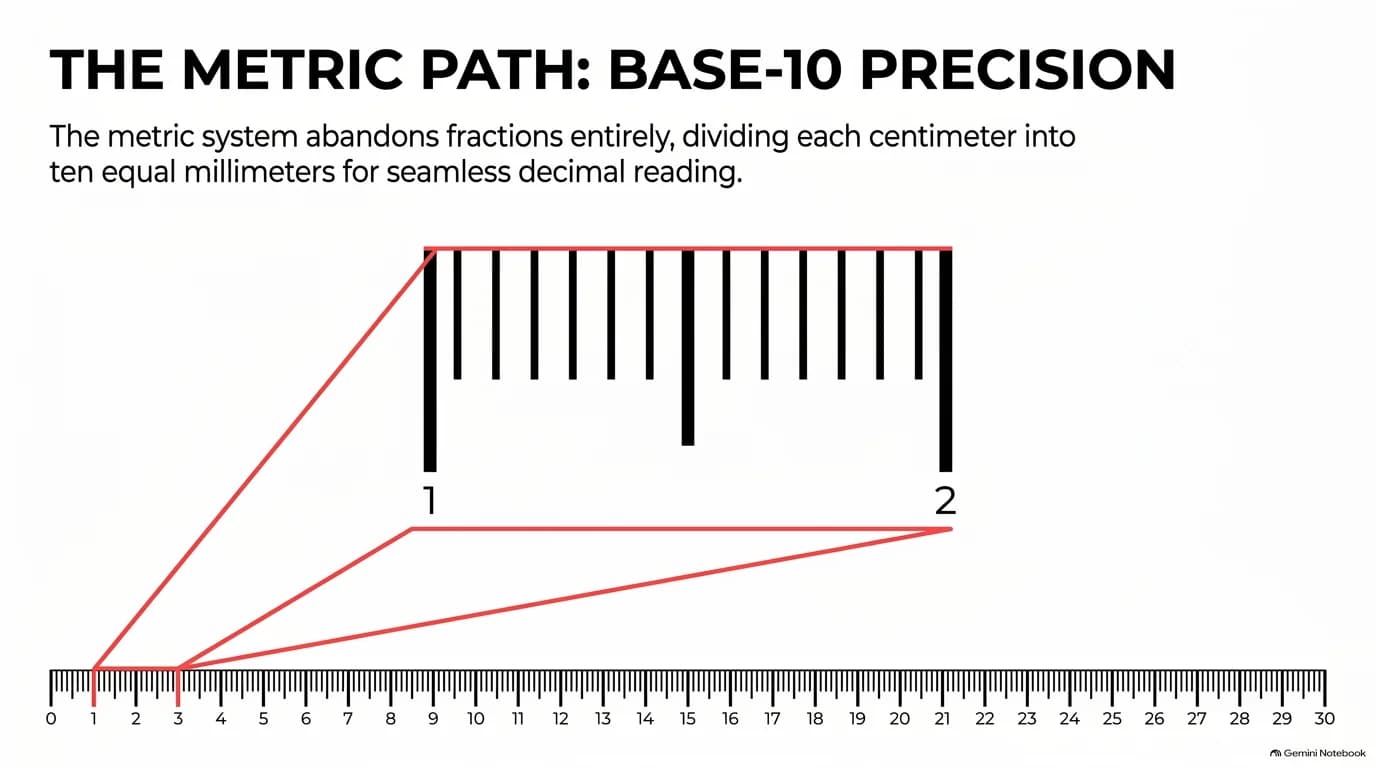
Every ruler uses line length to show you how big a division is. The longest lines, usually numbered, mark whole units - inches or centimeters. Between them, progressively shorter lines mark smaller and smaller fractions: a medium line usually marks a half, and shorter lines below that mark quarters, eighths, and so on. The pattern is consistent once you know to look for it - the shorter the line, the smaller the fraction it represents.
How to Read an Inch Ruler
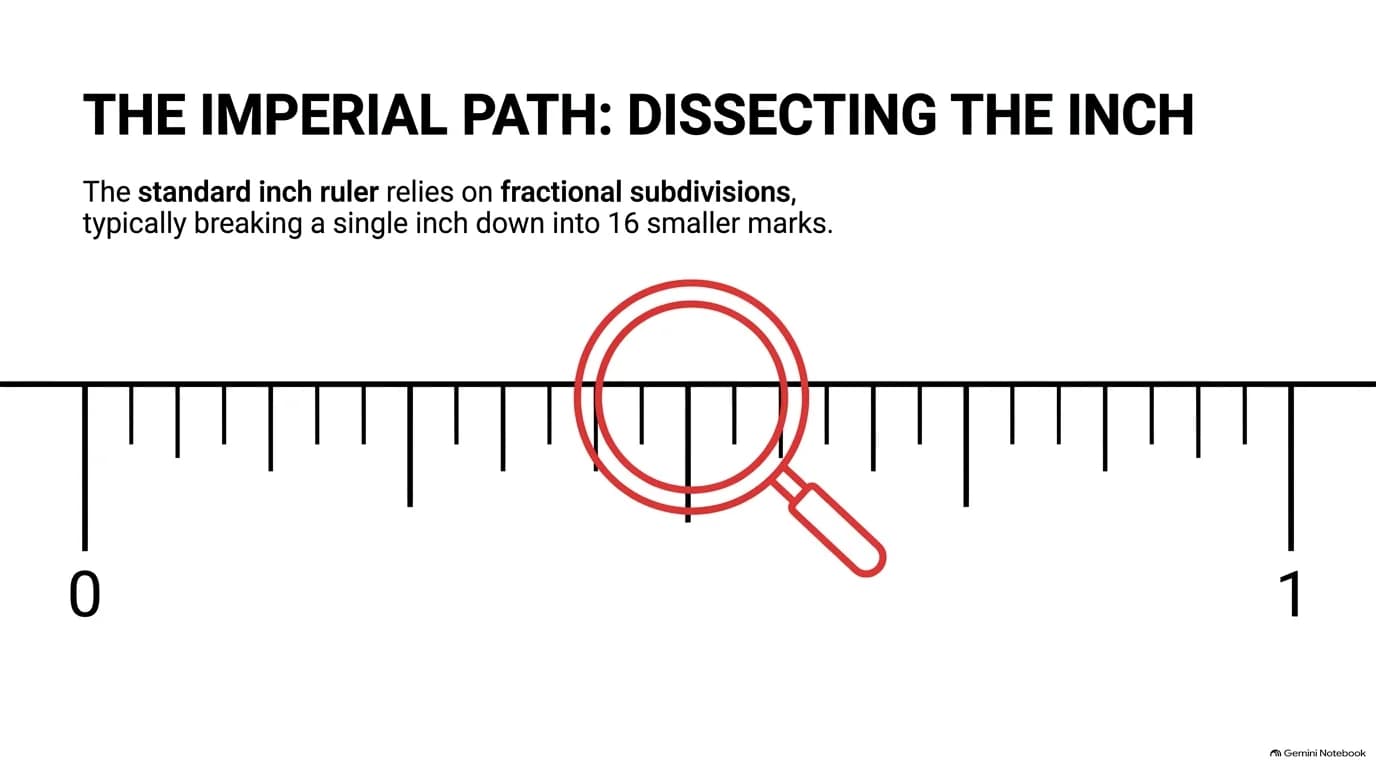
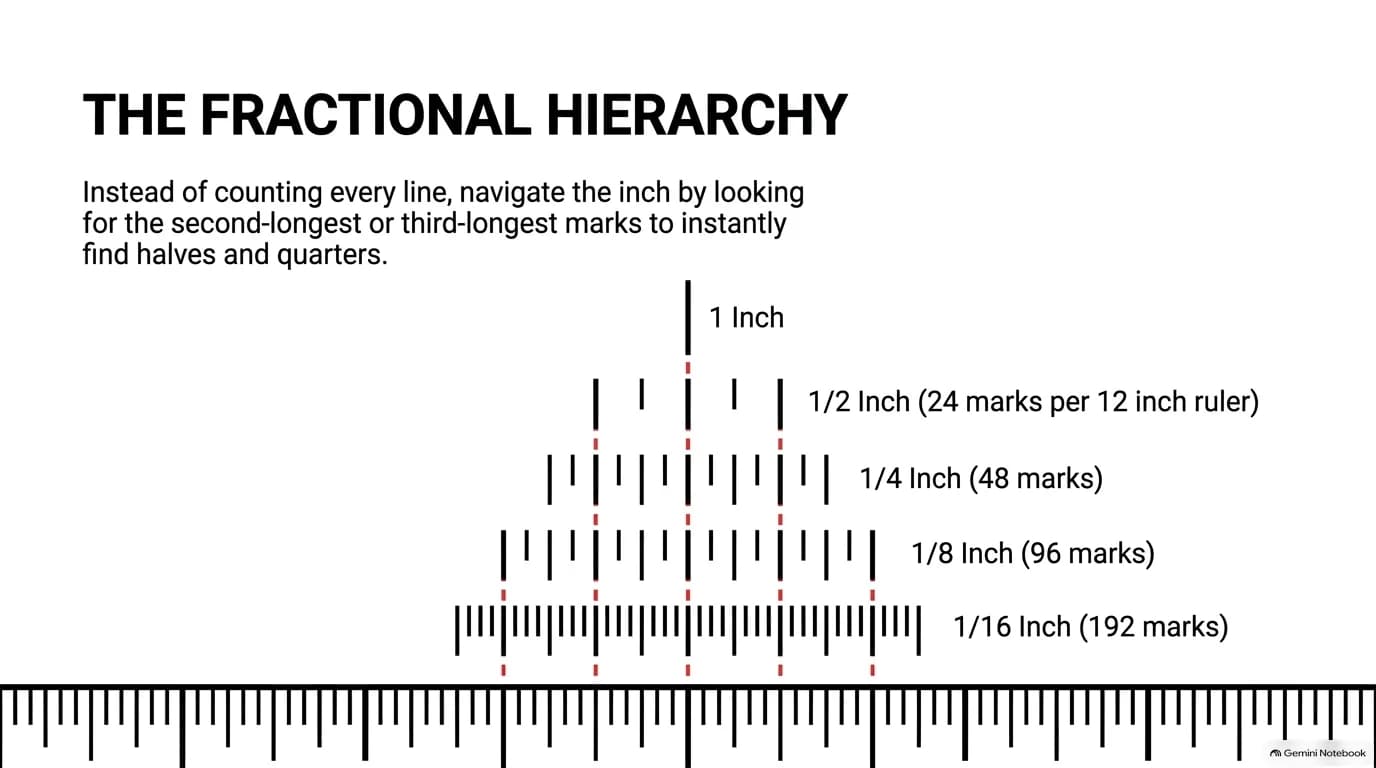
Most inch rulers divide each inch into sixteenths. Working from the longest lines down: the inch marks are longest, then halves (1/2″), then quarters (1/4″), then eighths (1/8″), then sixteenths (1/16″) as the shortest lines. To read a measurement, find the nearest whole inch to the left of your mark, then count the small lines past it - for example, an object ending 5 short lines past the 1-inch mark, where each short line is a sixteenth, lands at 1 5/16 inches.
Our Online Ruler does this same sixteenths breakdown automatically in Inches mode, showing you the exact fraction instead of asking you to count lines by eye.
Free tool: Online RulerTry the Online RulerFor a full visual walkthrough of both the imperial and metric systems, flip through this deck:
Slide 1 of 10 · hover to pause · click to enlarge
How to Measure Accurately With a Ruler
Reading the marks correctly is only half the job - how you position the ruler matters just as much. A few habits make a real difference:
- Start at zero, not the edge. Line up your object with the “0” mark itself - on many rulers the printed edge isn't exactly at zero, and using the edge instead adds a small but consistent error.
- Look straight down, not at an angle. Viewing the ruler from the side shifts where the mark appears to line up, an effect called parallax error - it's the same reason a car's speedometer needle looks different depending on where the driver sits.
- Read to the nearest mark, not by eye alone. If your object falls between two lines, round to the closer one rather than guessing a fraction that isn't printed on the ruler.
- Keep the ruler flat against the object. A ruler held at an angle to what you're measuring will always read longer than the object actually is.
Practicing With a Virtual Ruler
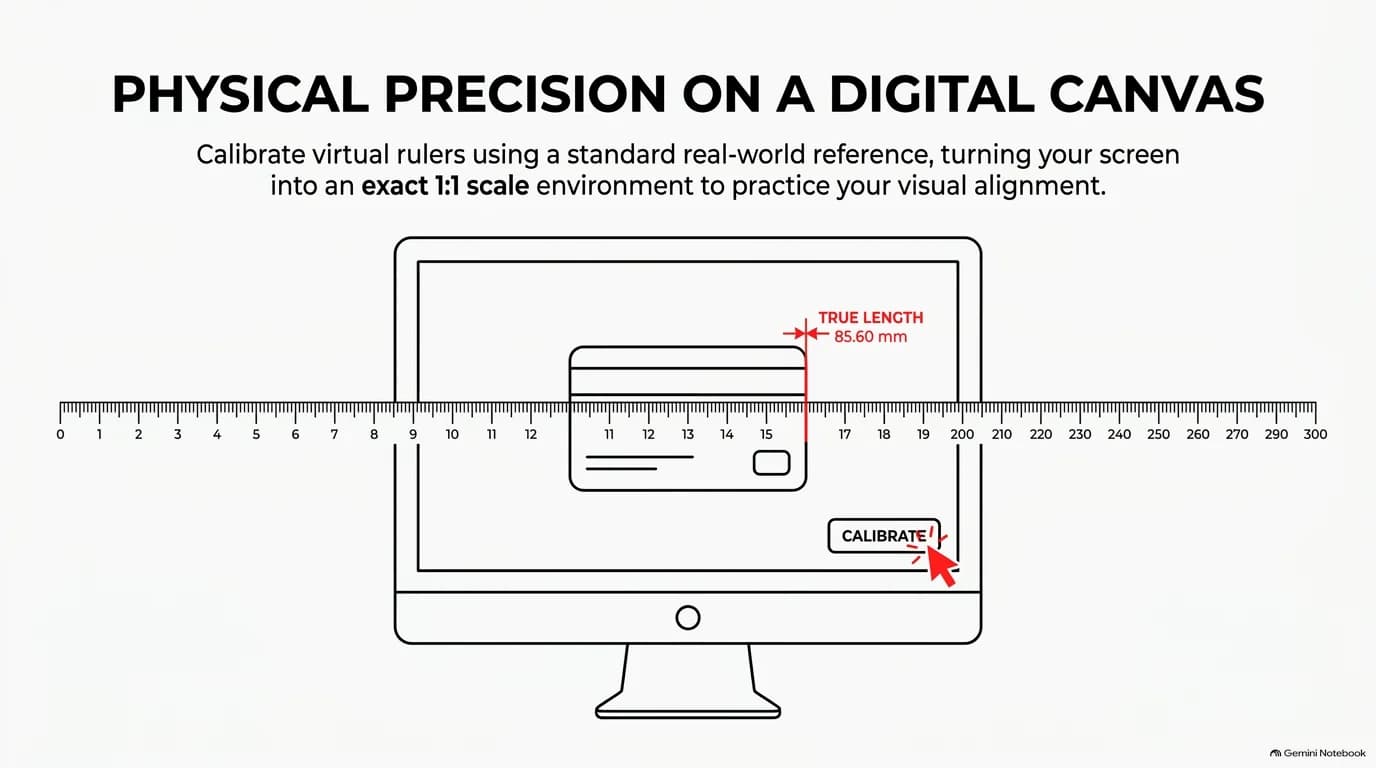
It's hard to practice reading a ruler without one in front of you - which is exactly what our Online Ruler solves. Calibrate it once using your screen size, a credit card, a coin, or a sheet of paper as a size reference, and the on-screen ruler becomes accurate to real-world scale. From there, you can measure anything on your desk directly against your monitor, in either inches or centimeters.
Frequently Asked Questions
How do you read a ruler?
Find the nearest whole unit to the left of your mark, then count the smaller lines past it - each shorter line represents a smaller fraction of that unit, down to sixteenths on most inch rulers.
How do you measure accurately with a ruler?
Line up your object with the '0' mark rather than the ruler's edge, view it straight-on to avoid parallax error, and read to the nearest printed line instead of estimating between marks.
What is the smallest mark on a typical ruler?
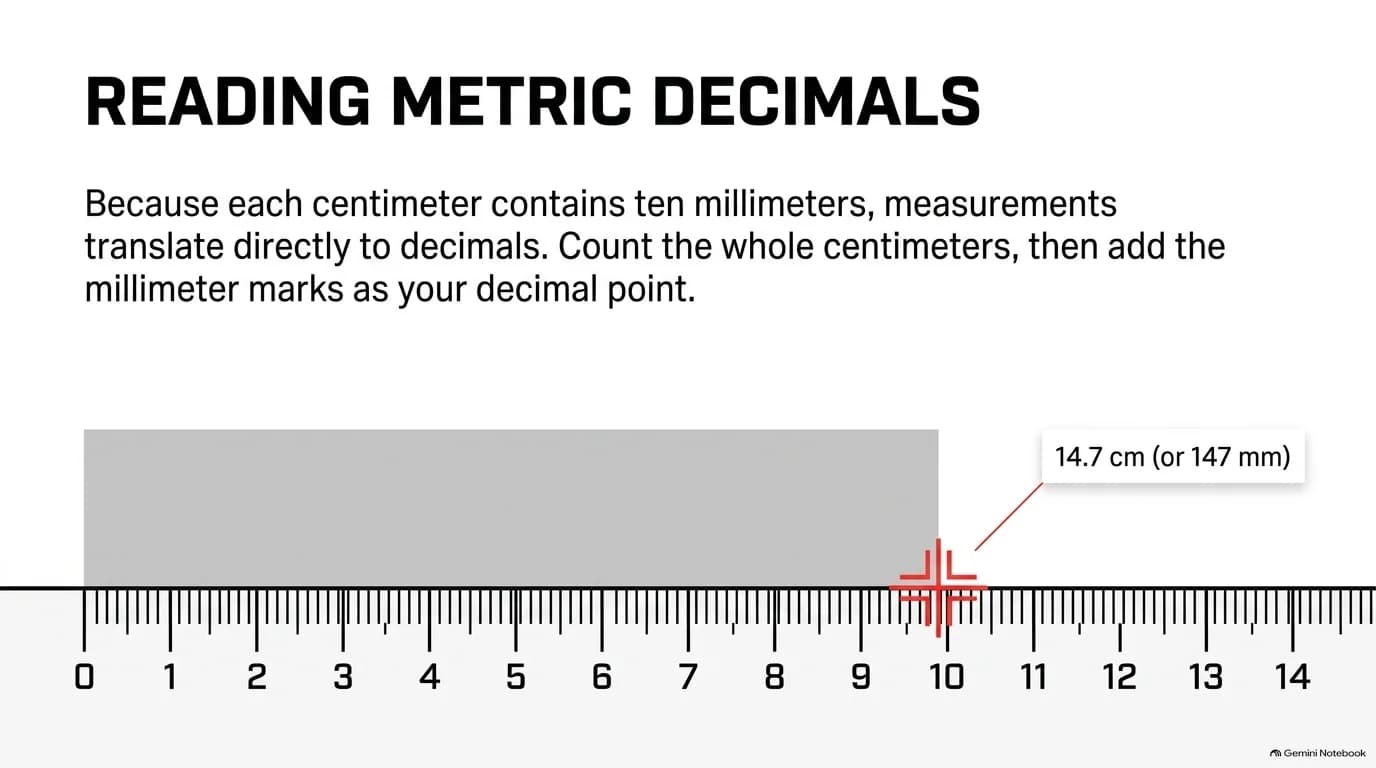
Most inch rulers divide down to 1/16 of an inch; most metric rulers divide down to 1 millimeter (1/10 of a centimeter).
Why do rulers have lines of different lengths?
Line length signals the size of the division at a glance - the longest lines mark whole units, and progressively shorter lines mark progressively smaller fractions of that unit.
Can I practice reading a ruler without a physical one?
Yes - our Online Ruler can be calibrated using your screen size, a credit card, a coin, or a sheet of paper, so it measures real objects held up to your screen at true scale.